Dryer vent cleaning in Mountain Park Ranch
One of the largest and most established communities in Ahwatukee, with genuinely mixed housing and the most nest calls we take anywhere in the village. $99 flat, roof terminations included.
Calls answered 7am to 8pm · same-day service usually available
Street address and a date and time that suits you is all we need to book it in.
Either side of Ray Road, between 40th and 48th Street
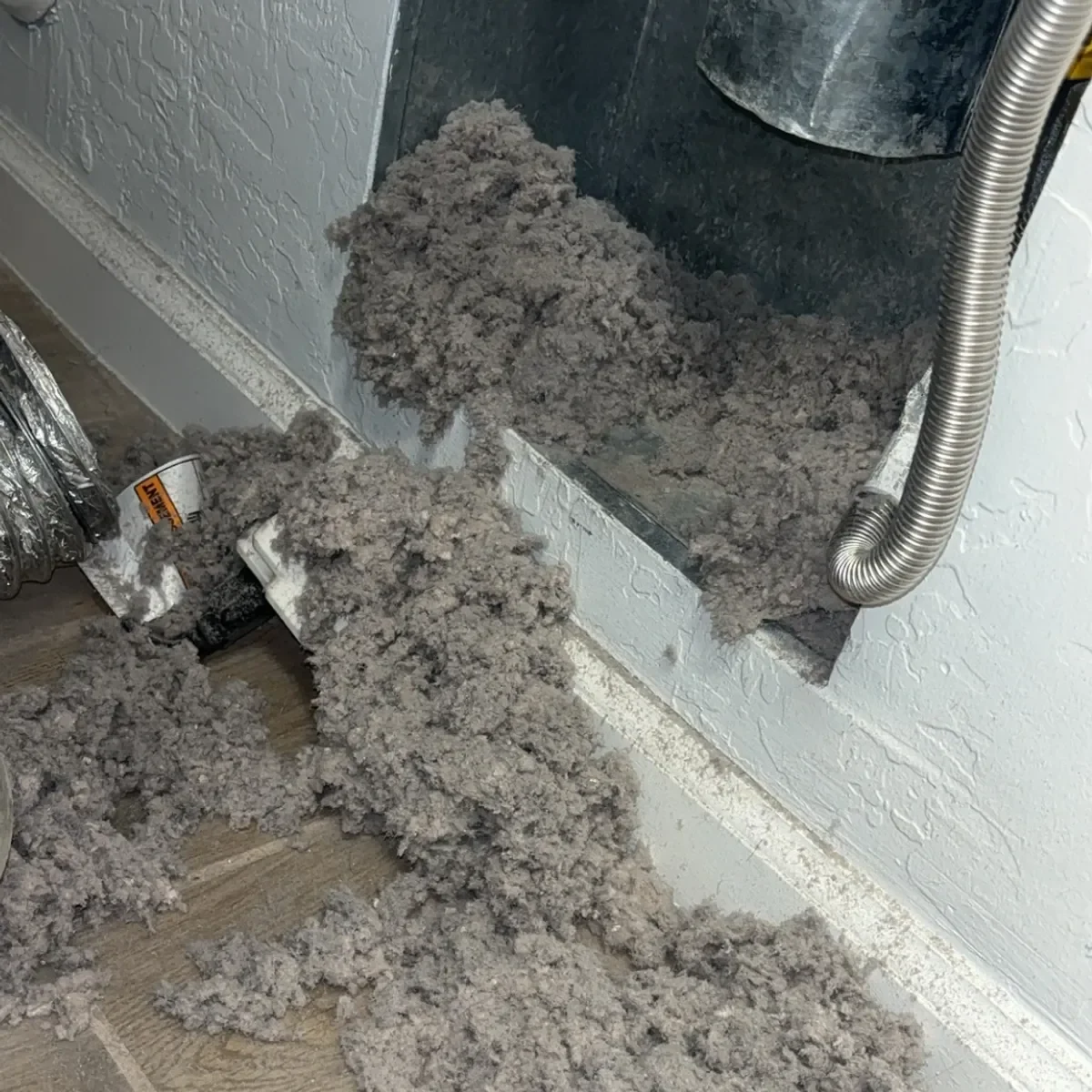
Mixed stock means we ask rather than assume
Mountain Park Ranch was built out over roughly a decade from the mid eighties, which is long enough that the housing is not one thing. Single-story plans sit alongside two-story ones, sometimes on the same street, with several builders and a good spread of sizes.
For our purposes that means no assumptions. Somewhere like Foothills Reserve we can be fairly confident what the run looks like before arriving. Here we genuinely cannot.
The check takes thirty seconds. Walk outside and look for a vent flap on an exterior wall close to your laundry room. Find one and you have a short side-wall run, which is the straightforward version and holds up well over time. Find nothing and the exhaust is going up and out through the roof, which is a longer route with more bends and a considerably shorter service interval.
The mature landscaping problem
Mountain Park Ranch has significantly more tree cover than the newer parts of Ahwatukee, which is a large part of why people like living here and the reason we pull more nests out of this neighborhood than any other.
What a bird wants is height, shelter and a small opening into a warm cavity. An unguarded roof cap surrounded by mature trees is about as close to ideal as it gets, and nesting runs roughly February through May.
The flapper is supposed to prevent it. It lifts under airflow and drops shut when the machine stops. After thirty-odd years of desert sun a great many of them no longer close, and nobody notices, because the dryer still works and the cap is twenty feet up. Full detail on that here, including why the code will not let you screen the opening.
Thirty-five years of hardware
The duct inside the wall generally survives this long without trouble. The parts attached to it do not.
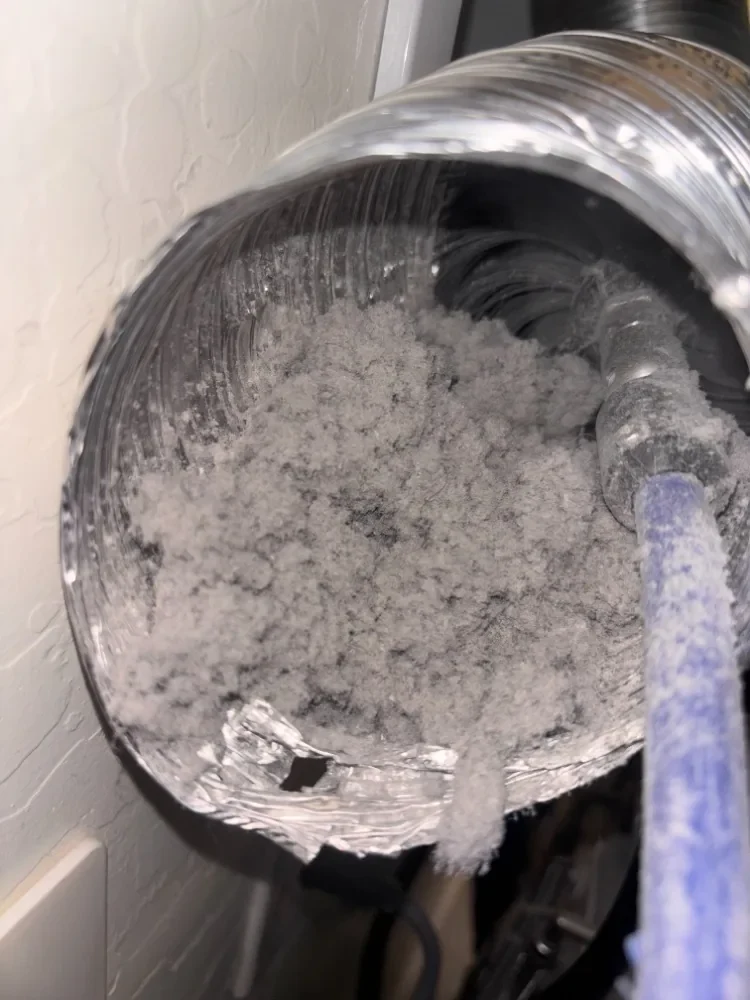
The flexible section at the back of the appliance is often the one the house was built with. Foil that has spent three decades heating and flexing turns brittle, splits along the corrugations and folds under its own weight, leaving the tightest restriction in the entire system three feet from the machine.
The exterior flapper has been in full sun since the eighties. Warping, a seized hinge, or simply sitting permanently ajar. Either failure mode causes a problem: stuck shut is a blocked vent on its own, stuck open is an invitation.
The joints from this period were frequently taped rather than mechanically fixed, and tape does not survive thirty-five years in an attic. A separated joint means the appliance has been discharging hot, damp, lint-laden air into the building fabric.
Source: National Fire Protection Association, Home Fires Involving Clothes Dryers and Washing Machines.
How the job runs here
- Work out what you have. We trace the route, look at the exterior cap or the roof hood, and check the flexible section behind the appliance. On the hillside lots especially, the run is often not where people assume it is.
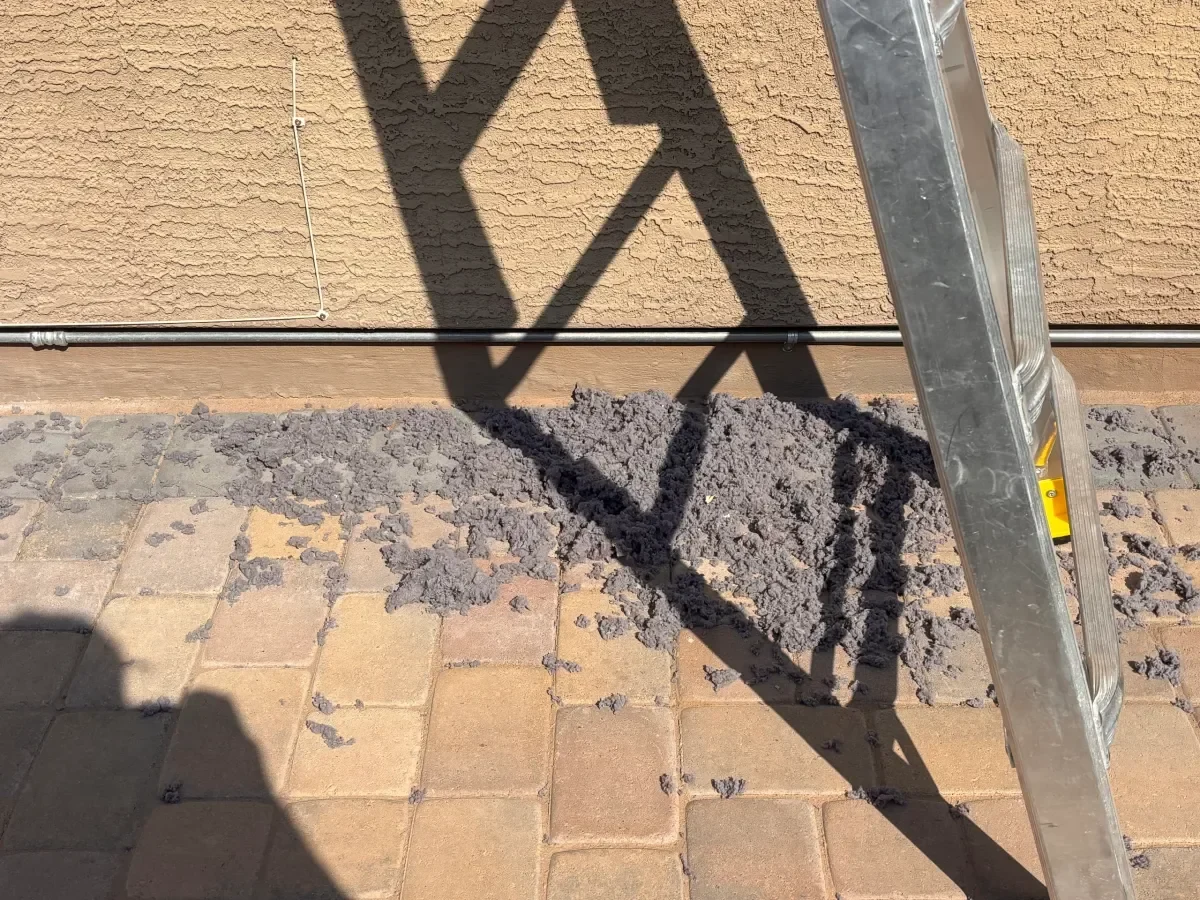
- Outside first, machine running. The dryer stays powered up the entire time we are at the termination, so its own exhaust pushes whatever we loosen out and clear of the duct instead of letting it settle back into the run. It throws lint around outside. Clearing that up is part of the job.
- Then inside. Power off, hose uncoupled, appliance drawn away from the wall. The brush goes into the vent from this end, the freed material comes down toward us, and the vacuum takes it out of the cavity.
- Two ends when the run earns it. A long route with several bends gets worked from both directions, since a brush entering from one side never properly reaches the far half. A short straight run does not, and we will say so instead of inventing work.
- Back together, and you look at it. Appliance reconnected and run, and the material we pulled out left in front of you.
How often it needs doing
Ten months is the interval for an ordinary household. Treat that as a maintenance schedule rather than a nudge.
- Every 10 months in a typical Ahwatukee home
- Every 4 to 6 months where the house is full and the machine runs most days
- Monthly on commercial equipment
Plenty of people here treat a slow dryer as the cue to call somebody. By then you are not approaching the interval, you went past it roughly a year ago. Slow drying is what surfaces after months of restricted airflow have already been working on the appliance, not the point at which the problem starts.
Questions from Mountain Park Ranch homeowners
Is there an extra charge to come out to Mountain Park Ranch?
There is not. It is $99 flat across the whole of Ahwatukee, and this area falls in 85044. No call-out fee, no pricing by zone, no surcharge for roof access. The village is compact enough that charging by location would amount to billing you for our drive.
What happens when I ring?
We take the street address and a date and time that suits you, and you go in the diary. That is the whole process. The price is given on that call, $99 for a standard vent with roof access included, and most homes are fitted in within the same week. Same-day is often possible if you catch us early. The phone is answered 7am to 8pm.
How often does this actually need doing?
Ten months in an ordinary household. Four to six months where the house is full and laundry runs most days, or where dust exposure is heavy. Monthly on commercial equipment. Those are intervals rather than suggestions, and if your trigger for ringing anyone is the dryer going slow, you went past due about a year ago.
How do I tell whether mine needs it?
Two checks, both free. If the appliance is posting an error code, that is the duct roughly 95 percent of the time, because modern machines detect restriction and fault out before you notice slow drying. Second, run it on the no-heat setting and feel the air at the outside termination. Strong steady flow means the duct is clear. Weak or nothing means it is not.
How long will you be at the house?
Between 45 and 90 minutes for most homes here. A short single-story side-wall run sits at the quick end. A long roof run with several bends takes longer, because it gets worked from the cap and from the appliance rather than one side only. A nest or a genuine obstruction adds time, and you hear about that before we start rather than after.
Do I have to move the dryer first?
No. We unplug it, uncouple the hose and draw it out ourselves, then put it back where it was and run it before leaving. Nobody should be hauling an appliance across a laundry floor on our behalf.
Elsewhere in Ahwatukee
The Foothills and Lakewood · Club West · Original Ahwatukee · Foothills Reserve and Calabrea · Ahwatukee Custom Estates and the hillside lots
Calls answered 7am to 8pm · same-day service usually available
$99 flat with roof access included. Call or text.