Dryer vent cleaning in Club West
The most dust-exposed neighborhood in Ahwatukee, and the one place here where what is outside the house genuinely changes what ends up in the duct. $99 flat, roof terminations included.
Calls answered 7am to 8pm · same-day service usually available
Street address and a date and time that suits you is all we need to book it in.
Southwest Ahwatukee, around Chandler Boulevard and 19th Avenue
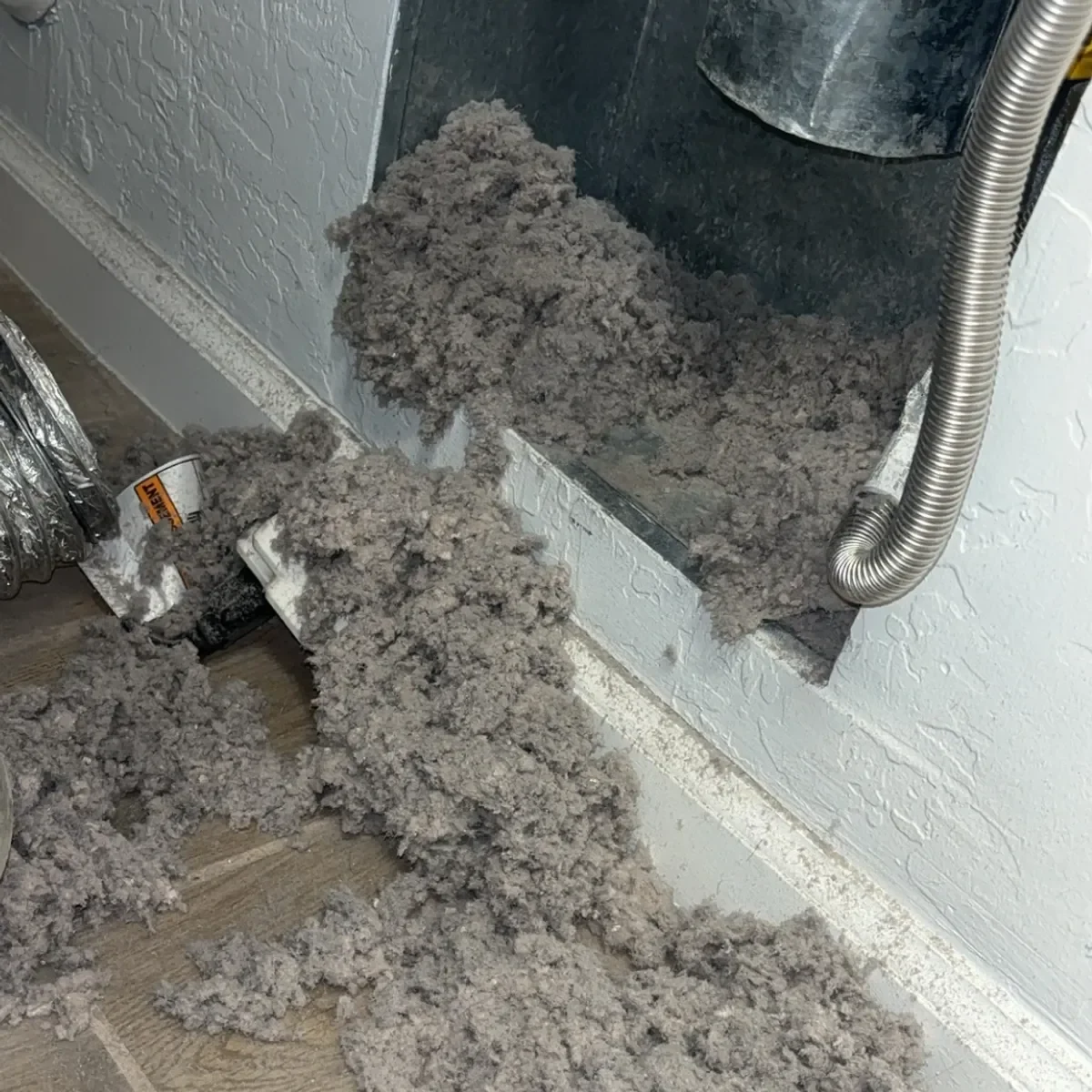
The dust situation is real and it is specific to here
Club West was laid out in the nineties around a golf course, and homes were positioned to look out over it. That course has since closed and the turf has gone, which residents have been living with and arguing about for years.
We are not going to wade into that. What we will say is that it changes the job, and it is the only place in the village where we find ourselves saying so.
A watered, planted course holds soil down. An unwatered expanse of dead turf and bare ground does not, and the fine material that comes off it ends up in everything downwind, including your lint screen cavity and your duct. Caliche dust is not like household dust. It binds into lint and produces something denser and considerably more stubborn than lint alone.
If your house backs or faces that ground, we would put you on a shorter interval than the ten months we suggest elsewhere.
What that does inside the machine
Two effects worth understanding, because they compound.
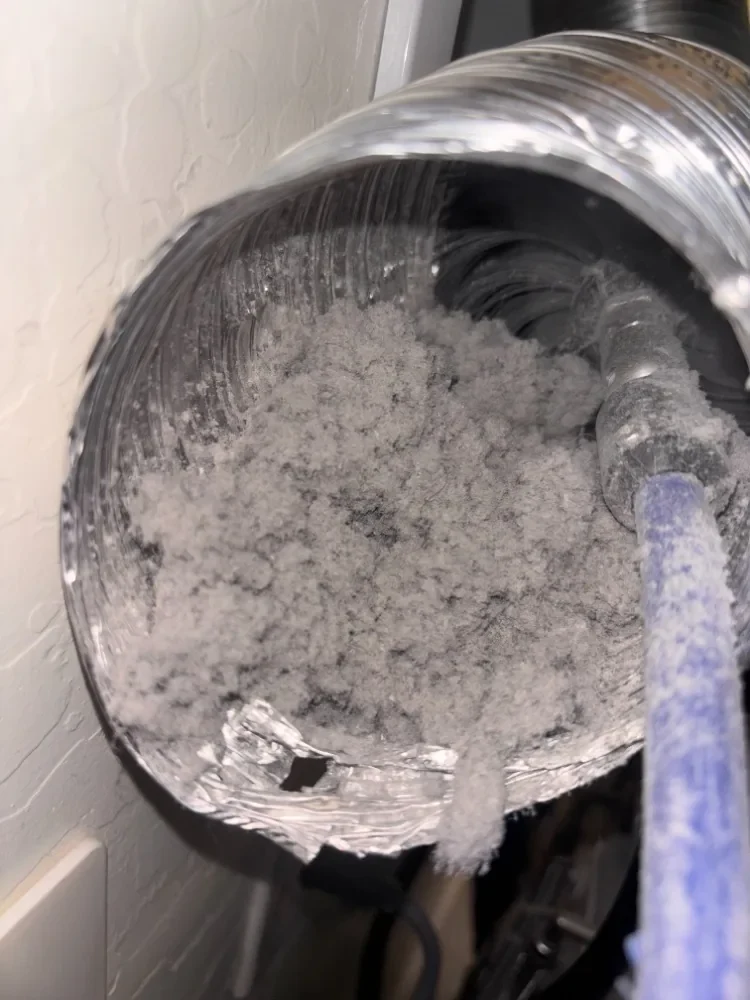
In the duct, dust-bound lint packs tighter and adheres more readily to the pipe wall than lint on its own. It resists the kind of half-hearted cleaning a blower produces, which is one reason people in this neighborhood sometimes have the vent done and see no improvement.
In the lint trap housing, the cavity underneath your removable screen, it accumulates faster than normal. That housing has no way of clearing itself and most owners have never had it opened. In a dust-exposed home it is doing more restricting than it would elsewhere, and it sits at the intake end, before the air ever reaches the duct.
That is why we lean on the housing clean more firmly out here than we do in the rest of the village.
Roof runs on top of all that
Club West is heavily two-story with upstairs laundry, so most of what we do here is roof work as well. Long runs, several bends, tile underfoot.
Roof access is in the $99. It is worth asking any other company you ring whether theirs is, because the standard play is a low figure on the phone followed by a surcharge or a cancellation once they see a two-story tile roof in August.
Combine a long roof run with the dust exposure and you have the shortest realistic service interval anywhere in Ahwatukee. This is not upselling, it is just what the conditions produce.
Source: National Fire Protection Association, Home Fires Involving Clothes Dryers and Washing Machines.
How the job runs here
- Work out what you have. We trace the route, look at the exterior cap or the roof hood, and check the flexible section behind the appliance. On the hillside lots especially, the run is often not where people assume it is.
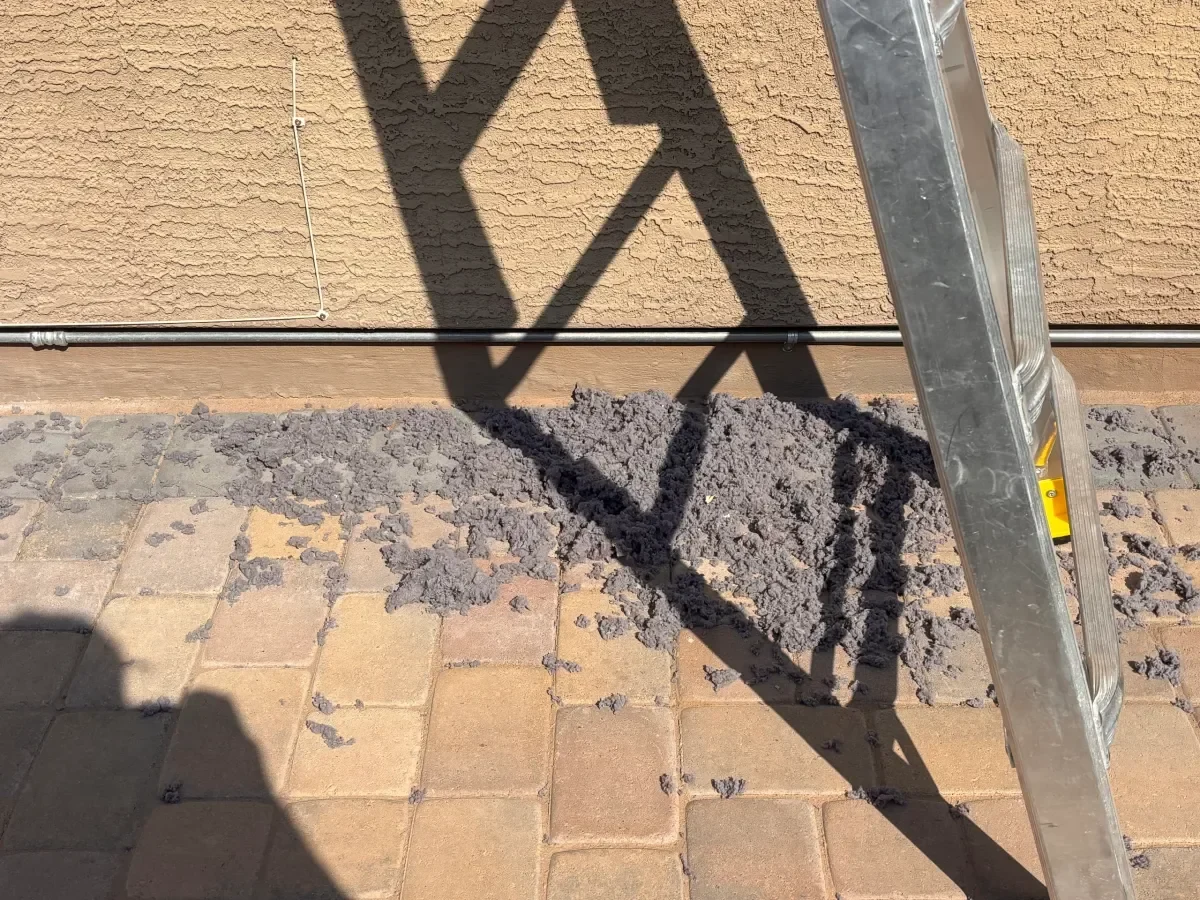
- Outside first, machine running. The dryer stays powered up the entire time we are at the termination, so its own exhaust pushes whatever we loosen out and clear of the duct instead of letting it settle back into the run. It throws lint around outside. Clearing that up is part of the job.
- Then inside. Power off, hose uncoupled, appliance drawn away from the wall. The brush goes into the vent from this end, the freed material comes down toward us, and the vacuum takes it out of the cavity.
- Two ends when the run earns it. A long route with several bends gets worked from both directions, since a brush entering from one side never properly reaches the far half. A short straight run does not, and we will say so instead of inventing work.
- Back together, and you look at it. Appliance reconnected and run, and the material we pulled out left in front of you.
How often it needs doing
Ten months is the interval for an ordinary household. Treat that as a maintenance schedule rather than a nudge.
- Every 10 months in a typical Ahwatukee home
- Every 4 to 6 months where the house is full and the machine runs most days
- Monthly on commercial equipment
Plenty of people here treat a slow dryer as the cue to call somebody. By then you are not approaching the interval, you went past it roughly a year ago. Slow drying is what surfaces after months of restricted airflow have already been working on the appliance, not the point at which the problem starts.
Questions from Club West homeowners
Is there an extra charge to come out to Club West?
There is not. It is $99 flat across the whole of Ahwatukee, and this area falls in 85045. No call-out fee, no pricing by zone, no surcharge for roof access. The village is compact enough that charging by location would amount to billing you for our drive.
What happens when I ring?
We take the street address and a date and time that suits you, and you go in the diary. That is the whole process. The price is given on that call, $99 for a standard vent with roof access included, and most homes are fitted in within the same week. Same-day is often possible if you catch us early. The phone is answered 7am to 8pm.
How often does this actually need doing?
Ten months in an ordinary household. Four to six months where the house is full and laundry runs most days, or where dust exposure is heavy. Monthly on commercial equipment. Those are intervals rather than suggestions, and if your trigger for ringing anyone is the dryer going slow, you went past due about a year ago.
How do I tell whether mine needs it?
Two checks, both free. If the appliance is posting an error code, that is the duct roughly 95 percent of the time, because modern machines detect restriction and fault out before you notice slow drying. Second, run it on the no-heat setting and feel the air at the outside termination. Strong steady flow means the duct is clear. Weak or nothing means it is not.
How long will you be at the house?
Between 45 and 90 minutes for most homes here. A short single-story side-wall run sits at the quick end. A long roof run with several bends takes longer, because it gets worked from the cap and from the appliance rather than one side only. A nest or a genuine obstruction adds time, and you hear about that before we start rather than after.
Do I have to move the dryer first?
No. We unplug it, uncouple the hose and draw it out ourselves, then put it back where it was and run it before leaving. Nobody should be hauling an appliance across a laundry floor on our behalf.
Elsewhere in Ahwatukee
The Foothills and Lakewood · Mountain Park Ranch · Original Ahwatukee · Foothills Reserve and Calabrea · Ahwatukee Custom Estates and the hillside lots
Calls answered 7am to 8pm · same-day service usually available
$99 flat with roof access included. Call or text.